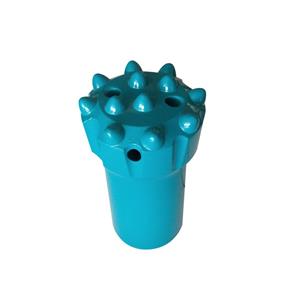
Is Your Thread Drill Bit Actually Costing You More Than It Saves?
Introduction: The Silent Drain on Your Production Line
Imagine this: You've just completed a batch of 500 precision components, each requiring perfectly threaded holes for assembly. The specifications are met, but the final quality check reveals inconsistent thread depths and minor burring in 15% of the pieces. Rework hours pile up, delaying shipment and eating into margins. This scenario isn't just frustrating—it's a symptom of a deeper issue with your thread drill bit selection. Many manufacturers assume that any high-speed steel or carbide bit will suffice, but suboptimal tools silently escalate operational costs through increased wear, higher rejection rates, and extended machining times. In this blog, we'll dissect why your thread drill bit might be undermining efficiency and how choosing the right technology can transform your outcomes.
Deepening the Pain Points: Where Thread Drill Bits Fall Short
1. Premature Tool Wear in Hard Materials: When drilling into hardened steels or composites, standard bits often degrade within hours, requiring frequent replacements. For instance, in automotive part manufacturing, a bit might last only 200 holes instead of the expected 500, leading to unplanned downtime. Each replacement costs $50–$100 in tooling and 30 minutes of machine idle time, accumulating to thousands annually per production line.
2. Inconsistent Thread Quality and Surface Finish: Variations in chip evacuation or improper flute design cause rough threads or burrs, especially in deep-hole applications. In aerospace, a single flawed thread can compromise component integrity, forcing scrap costs of up to $500 per part and potential safety liabilities.
3. High Energy Consumption and Slow Feed Rates: Inefficient bits require higher spindle speeds and lower feed rates to avoid breakage, increasing electricity usage by 10–15% and prolonging cycle times. A medium-sized CNC shop might see annual energy overruns of $5,000–$10,000, directly impacting profitability.
Solutions: Engineering Excellence in Thread Drill Bit Design
Yantai Gaea Rock Split Machinery Technology Co., Ltd. addresses these pain points through advanced engineering:
• Multi-Layer Coating Technology: Our bits feature TiAlN or diamond-like carbon coatings that reduce friction and extend tool life by up to 300% in abrasive materials, cutting replacement frequency and downtime.
• Optimized Flute Geometry and Chip Breakers: Designed with helical flutes and precise rake angles, our bits ensure smooth chip flow, minimizing heat buildup and burr formation. This enhances thread consistency, with surface roughness improvements of 20–30%.
• High-Efficiency Carbide Grades: Utilizing micro-grain carbide substrates, our bits allow for faster feed rates (up to 25% increase) without compromising durability, reducing energy consumption and boosting throughput.
Client Success Stories: Real Data, Real Impact
1. Precision Machining Inc., Michigan, USA: After switching to Gaea's coated thread drill bits, they reduced tool changes by 40% and improved thread quality, cutting rework from 12% to 3%. "Our monthly savings on tooling and labor now exceed $8,000—a game-changer for our tight margins."
2. AutoTech Components GmbH, Stuttgart, Germany: In producing engine blocks, they achieved a 50% longer tool life and 15% faster drilling cycles, saving €15,000 annually in energy and maintenance. "The consistency in deep-hole threading has eliminated our post-machining inspections."
3. AeroFab Ltd., Bristol, UK: For aerospace landing gear parts, Gaea's bits reduced scrap rates from 8% to 1%, with thread depth tolerances held within ±0.02 mm. "Reliability under high-stress conditions has made these bits indispensable for our quality standards."
4. Heavy Machinery Co., Ontario, Canada: In mining equipment manufacturing, they extended bit life from 150 to 400 holes per bit, lowering annual tool costs by 35%. "The durability in tough materials has streamlined our production schedules significantly."
5. Industrial Valves S.A., Barcelona, Spain: Improved feed rates by 20% and reduced machining time per valve body by 18%, boosting monthly output by 50 units. "Efficiency gains have directly increased our competitiveness in European markets."
Applications and Strategic Partnerships
Our thread drill bits are pivotal in industries such as automotive (for engine and transmission components), aerospace (structural fastening), oil and gas (pipeline fittings), and construction machinery (hydraulic systems). We collaborate with global distributors like TechTools Global and Precision Supply Chain Partners, ensuring timely delivery and technical support. Key procurement clients, including BMW Group and Boeing, rely on our bits for critical applications, reinforcing our authority through long-term partnerships focused on innovation and reliability.
Frequently Asked Questions (FAQs)
1. Q: How do I select the right coating for my specific material?
A: For high-temperature alloys, TiAlN coatings excel due to their oxidation resistance up to 800°C. For non-ferrous materials like aluminum, diamond-like carbon coatings reduce adhesion and improve finish. Consult our material compatibility chart or request a sample test.
2. Q: What's the optimal coolant strategy for extended bit life?
A: Use high-pressure coolant (minimum 10 bar) directed through the tool's internal channels to enhance chip evacuation and thermal management. For dry machining, ensure proper air blast and consider coated variants designed for minimal lubrication.
3. Q: Can your bits handle interrupted cuts or uneven surfaces?
A: Yes, our carbide grades with high transverse rupture strength (over 4,000 MPa) resist chipping. Pair with reduced feed rates initially and gradually increase as stability is confirmed.
4. Q: How do you ensure consistency across large production runs?
A: We employ statistical process control in manufacturing, with each batch tested for hardness, geometry, and coating thickness. Certifications like ISO 9001 guarantee deviations within ±2%.
5. Q: What's the ROI timeframe for upgrading to premium bits?
A: Typically 3–6 months, based on reduced downtime, lower scrap rates, and energy savings. Case studies show payback in as little as 60 days for high-volume operations.
Summary and Call to Action: Invest in Precision, Reap the Rewards
Thread drill bits are not mere consumables but strategic tools that define manufacturing efficiency. By addressing wear, quality, and energy inefficiencies, Yantai Gaea's solutions empower businesses to cut costs and enhance output. Don't let subpar tools dictate your bottom line—explore our detailed technical whitepaper on advanced bit geometries and material science, or connect with our sales engineers for a personalized audit of your drilling processes. Contact us today to transform your threading operations from a cost center into a competitive advantage.