Safe Use Guidelines for Tapered Rock Drilling Tools
Safe Use Guidelines for Tapered Rock Drilling Tools
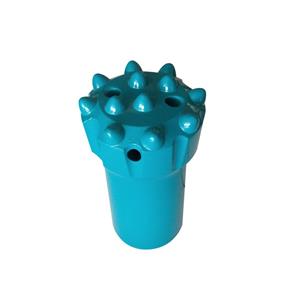
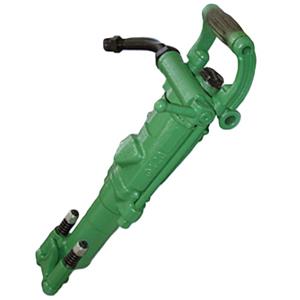
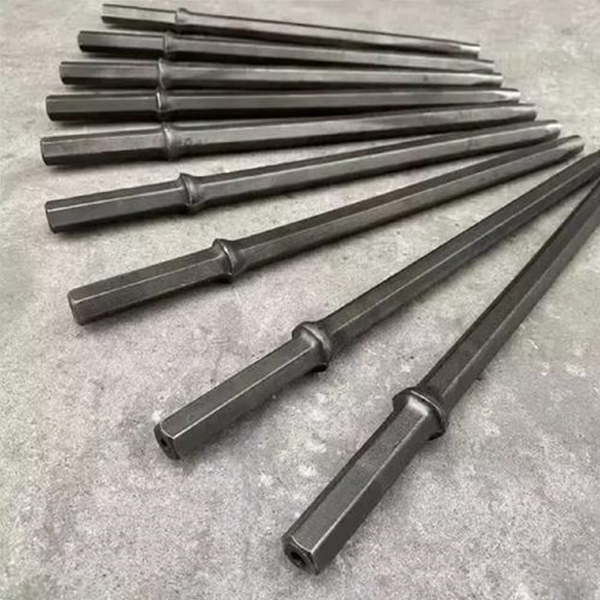
Tapered rock drilling tools are essential consumable components for handheld rock drills and small-scale drilling projects. Proper use helps extend the service life of drill rods and drill bits, reduce breakage and damage, and control overall operating costs. Personnel should follow standardized procedures and avoid improper disassembly, mixing worn and new tools, or non-compliant rework.
Equipment Matching and Assembly
Before work begins, inspect the rock drill and pay particular attention to bushing wear. Severely worn or deformed bushings should be replaced immediately.
Do not combine damaged, bent, or cracked used drill rods with new drill bits. Mixing old and new drilling tools can create uneven loading and lead to premature failure.
Standard Disassembly Procedures
Use dedicated removal tools and follow the specified disassembly sequence. Correct removal practices protect both drill bits and drill rods.
Avoid hammering, forced removal, or other rough handling. Improper disassembly can crack the bit skirt, damage tapered mating surfaces, or break the drill rod, increasing consumable costs and delaying construction work.
Taper Regrinding and Repair
When regrinding tapered sections, do not apply quench hardening to the taper. Rework must maintain the required dimensional and geometric accuracy.
Poor machining accuracy can cause dimensional deviation and incorrect taper angles, reducing contact quality and fit precision. It can also lower drilling efficiency and damage matching drill bits.
Daily Management and Wear Prevention
Establish lifecycle management for tool issue, field use, compliant rework, and scrapping. If shank-end failure, rod bending, or severe taper wear is detected, stop using the tool set and discard it promptly.
Efficiency and Cost Control
Standardized operation, routine maintenance, compliant rework, and timely replacement can extend regrinding intervals and improve overall drilling productivity. Controlling inventory appropriately also reduces unnecessary capital tied up in consumables.