Yantai Gaea CO2 Gas Rock Breaking: Principles and Engineering Applications
Yantai Gaea CO2 Gas Rock Breaking: Principles and Engineering Application Knowledge
Rock fragmentation is a major requirement in mining, highway construction, railway projects, foundation pits, slope excavation and site development. Conventional explosive blasting can be highly productive, but many projects face limits related to vibration control, nearby infrastructure, environmental requirements, material transport, storage controls and approval procedures.
The source article discusses CO2 gas rock breaking as a non-traditional rock-fracturing method. In this version, the original company name has been replaced with Yantai Gaea. The technology is described as a complete equipment and construction-process system that uses the physical change of liquid carbon dioxide into pressurized gas to help fracture rock.
This kind of approach should be treated as a controlled engineering option, not as a universal replacement for conventional blasting. Whether it is suitable depends on geology, project conditions, available equipment, workforce competence, local regulations and a formal safety-management plan.
Basic Principle of CO2 Gas Rock Breaking
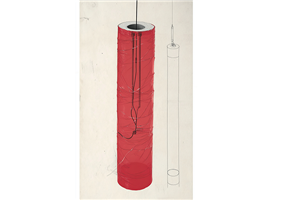
The article explains that liquid carbon dioxide can be contained within a purpose-designed pressure assembly. Under controlled conditions, the medium changes rapidly from liquid to gas. The large volume expansion produces pressure that acts on the surrounding rock mass and may cause cracks to develop or extend.
The intended mechanism is physical gas expansion, rather than the chemical detonation process used by conventional explosives. Once the pressure acting on the rock exceeds local tensile resistance, fractures may form along natural joints, bedding planes or other weak zones.
The source describes the process as having a relatively controlled pressure-development pattern compared with conventional explosive blasting. However, this does not mean that the process is risk-free. It involves pressure equipment and controlled energy release, so it must only be performed by trained, authorized personnel under approved site procedures.
Differences From Conventional Explosive Blasting
The source contrasts CO2 gas expansion with conventional blasting in terms of energy-release mechanism. Conventional explosives depend on rapid chemical reactions that produce high temperature, shock waves and intense instantaneous pressure. CO2 gas rock breaking depends on the physical expansion of a pressure medium.
For suitable projects, this difference may make CO2-based fracturing worth evaluating where conventional explosives are restricted or where a project needs additional control over excavation impacts. Examples may include areas close to residential communities, existing structures, important infrastructure or environmentally sensitive locations.
The technical, safety and regulatory status of a method must still be verified locally. A supplier should not assume that a process accepted at one site will automatically be approved at another.
Typical Engineering Applications
The article identifies several potential application settings:
Mine and quarry rock excavation
Tunnel and underground excavation
Highway and railway roadbed or slope works
Large foundation-pit excavation
Site leveling and infrastructure construction
Projects near protected structures or populated areas
Worksites with strict limits on vibration, flyrock or noise
Areas where conventional explosive products cannot be used
These scenarios do not guarantee technical suitability. The actual rock condition, borehole quality, free-face availability, groundwater, access conditions and project schedule must all be reviewed before selecting the method.
For Yantai Gaea, the right approach is to start with site information and engineering constraints rather than a standardized claim about performance.
Geology and Project Suitability
The source emphasizes that CO2 gas rock breaking is affected by rock hardness, integrity, joint development, fracture density and borehole conditions. These factors influence how pressure is confined, how cracks propagate and how easily the rock can be removed after fracturing.
In moderately hard rock or rock with favorable natural fracture development, a controlled pressure-fracturing approach may be useful. In very dense, highly competent rock with few natural discontinuities, the method may have more limited effectiveness and may need to be combined with mechanical breaking.
A project evaluation should consider:
Rock type and physical strength
Natural joints, fissures and bedding planes
Degree of weathering
Groundwater and water-bearing conditions
Drilling quality and excavation geometry
Available free face
Required fragmentation and removal method
Nearby utilities, buildings and sensitive infrastructure
Local safety, environmental and permitting requirements
The article notes that field trials and project-specific adjustment are important. This is a reasonable principle: actual rock behavior should be validated through qualified engineering work, not assumed from general descriptions.
Equipment and Project Support
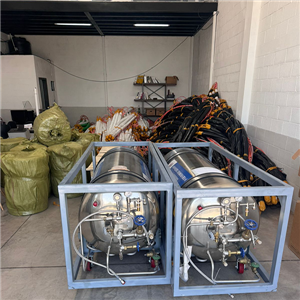
The source presents the rock-breaking system as involving more than a single component. A working project requires equipment compatibility, proper handling, operator preparation, equipment inspection, worksite organization and coordination with the contractor’s excavation sequence.
Yantai Gaea can provide technical discussion around equipment options, project information requirements, documentation, training needs and service scope. The company’s role should be to help customers understand the available engineering route and its boundaries.
Final design decisions, site authorization, operating procedures and safety controls must be established by qualified project personnel. Performance, cost and schedule outcomes cannot be guaranteed without reviewing the real project environment.
Safety and Compliance
The article discusses the need for professional operation, equipment maintenance and trained personnel. These are essential points. CO2 gas rock breaking involves pressure systems, and the associated equipment must be inspected, maintained and handled in accordance with applicable standards.
Project safety planning should address equipment condition, approved work zones, access controls, operator competency, emergency arrangements and post-operation inspection. Any damaged or unsuitable pressure equipment should be removed from service in accordance with approved maintenance procedures.
Local requirements for pressure systems, industrial gases, transport, storage, construction activities and occupational safety vary by jurisdiction. Contractors and project owners must confirm applicable requirements with qualified professionals and relevant authorities before work begins.
Environmental and Economic Considerations
The source describes CO2 gas rock breaking as a potential option where project teams want a more controlled alternative to conventional blasting. Environmental objectives may include reducing disruption in locations with sensitive surroundings, but results must be assessed for the actual site.
Noise, vibration, dust, vehicle movement and other construction impacts can still occur. Environmental compliance must be based on project-specific monitoring, mitigation requirements and local approvals.
The economic evaluation should include more than the direct cost of the medium or equipment. A complete comparison should consider drilling, transport, logistics, labor, training, equipment maintenance, work sequencing, secondary breaking and material removal.
For some projects, CO2 gas expansion may be a practical complementary method. For others, conventional blasting, hydraulic breaking or another excavation option may be more suitable. A rational decision requires a whole-project assessment.
Frequently Asked Questions
How does CO2 gas rock breaking differ from conventional explosive blasting?
The source describes CO2 gas rock breaking as a physical pressure-fracturing method. Conventional blasting uses rapid chemical detonation. The exact legal classification and operating requirements should be confirmed locally.
Where can it be considered?
Potential scenarios include mines, tunnel works, foundation pits, road and railway slopes, site leveling and projects with strict controls on conventional blasting impacts.
Is it suitable for every rock type?
No. Rock strength, fracture development, groundwater conditions and borehole quality can substantially affect the result. Dense, intact rock may require a different or combined excavation approach.
What should be reviewed before selecting a provider?
Project teams should review comparable experience, equipment-maintenance records, operator training, site-management capability, geological understanding and the supplier’s ability to support a project-specific assessment.
Is CO2 gas rock breaking automatically safe?
No. Pressure-based systems still require trained personnel, inspected equipment, approved procedures, site controls and compliance with all applicable regulations.